How to Mount a TV Above a Fireplace

Mounting a TV above a fireplace often feels like the obvious choice—until you live with it. Do it incorrectly and you may have to live with neck strain, a screen you avoid turning on, or a TV that runs hotter than it should because it’s parked where heat naturally rises.
By the end of this guide, you’ll know when above-the-fireplace TV mounting makes sense and how to safely pull it off.
Why People Mount TVs Over Fireplaces in the First Place
In many homes, the fireplace is centered on the main wall. Furniture faces it. Walkways depend on it. That often leaves the area above the mantel as the only spot that doesn’t disrupt the room.
That’s why blanket advice like “never mount a TV over a fireplace” falls flat. In real living rooms—especially older ones—there may be no better alternative.
The real question isn’t whether you can do it, but how to mount a TV over a mantel in a way that’s comfortable, safe, and intentional.
In practice, success comes down to three priorities:
Comfort – If the TV is too high, you won’t use it.
Heat management – Even moderate heat can shorten a TV’s lifespan.
Structure and finish – The mount must be solid, and the result should look planned.
Find the Perfect Pull-Down TV Mount for You
Fireplace TV Height: The Comfort Problem Most People Never Fix
Fireplace walls almost force TVs higher than ideal. You have the firebox, the surround, the mantel—and only then open wall space.
If you mount the TV to “look centered” above the mantel, the screen’s center often ends up well above seated eye level. That means tilting your head back for every show. Some people tolerate it. Many don’t. Few move the TV once it’s mounted.
A better way to think about fireplace TV height is this: Where do your eyes land when you’re actually watching?
In most living rooms, comfort is best when your eyes hit roughly the middle or lower half of the screen—not the bottom edge, and certainly not the mantel.
That’s why successful above-fireplace installs usually do one of three things:
Mount the TV as low as physically possible above the mantel
Use a tilting mount to reduce neck strain
Use a pull-down mount so the TV drops to a normal viewing height when in use
The mistake that causes instant regret
People measure from the floor to the bottom of the TV and stop there. What matters is the screen center relative to your seating height and distance.
If your sofa is low or deep, a high-mounted TV feels even higher. If the taped-out TV already feels “a bit high,” it will feel worse after a two-hour movie.
Rule of thumb: If it feels high during planning, that’s your cue to seriously consider a pull-down mount.
Heat-Safe TV Mounting: What “Safe” Actually Means
Heat is where people either panic or shrug it off. The reality is in between.
Modern TVs rely on plastic components, adhesives, and rear ventilation. Even if nothing overheats dramatically, consistent elevated temperatures shorten electronics lifespan.
Fireplace type matters
Wood-burning fireplaces can send significant heat up the wall.
Gas fireplaces vary widely depending on venting and design.
Electric fireplaces are usually cooler, but some still vent warm air upward.
The safest mindset is simple: don’t guess—measure.
The one test that matters
Run the fireplace the way you actually use it for a full cycle. Then measure the wall temperature where the TV would mount using an infrared thermometer.
If the wall is hot to the touch, pause. Heat rises, and the area above the firebox is where it concentrates.
Mantel depth helps—but isn’t magic
A deeper mantel can deflect some heat outward, but it doesn’t create airflow behind a TV mounted tight to the wall. Ultra-slim flush mounts often look great, but they can trap heat in exactly the wrong place.
For heat-safe TV mounting, you want:
Clearance for rear ventilation
A mount that doesn’t trap heat
Honesty about how often you use the fireplace
If you’re unsure, treat that uncertainty as a stop sign—not a green light.
Choosing the Right Mount: Fixed, Tilt, or Pull-Down
Above a fireplace, “slim” is often the wrong priority. The real choice is whether you value appearance when the TV is off or comfort when it’s on.
Fixed mounts
Clean and simple, but least forgiving.
Best when: the mantel is low and the TV can sit close to normal height. Downside: no correction if the viewing angle is uncomfortable.
Tilting mounts
The minimum upgrade for high placement.
Best when: the TV is moderately high and you need angle relief or glare reduction. Downside: tilt helps, but it doesn’t change neck posture.
Pull-down mounts (comfort-first)
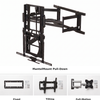
A lets the TV live high visually, then drop to eye level for viewing. In rooms where the mantel forces height, this is often the only solution people stay happy with long-term.
Watch for:
Mantel clearance for downward travel
Quality counterbalance (cheap ones sag)
Proper cable slack and routing
Remember: moving mounts increase leverage on the wall. Structure matters more here than with fixed mounts.
Mounting a TV Over Brick or Stone: What Changes
Many fireplace walls are masonry, not drywall. That changes everything.
Uneven stone or brick can prevent a mount from sitting flat.
Masonry requires masonry-rated anchors and precise drilling.
“It felt tight” isn’t enough—poor anchors loosen over time.
Cable routing is often the bigger challenge. Running power and HDMI through masonry is rarely simple. That’s why many clean fireplace setups use:
Painted surface raceways
Cable routing through adjacent framed walls
A nearby console to reduce what runs up the wall
Confirm what the wall actually is before planning a “no wires” look.
Read Next: Mounting Your TV on Brick or Stone: What You Need to Know
Fireplace Entertainment Setup: Think Beyond the Bracket
Most failed installs aren’t about the mount—they’re about everything around it.
Audio
A TV above a mantel often leaves the soundbar awkwardly placed or skipped entirely. Dialogue then sounds thin or comes from above your head.
Best options:
Soundbar mounted below the TV (if height allows)
Soundbar attached to the TV or pull-down mount so audio follows the screen
Glare
Fireplace rooms often have large windows. A higher TV catches more reflections. Tilt helps somewhat; window treatments help more.
Components
Streaming boxes and consoles still need a home. Decide where they live before deciding how invisible cables should be.
When You Should Not Mount a TV Above the Fireplace
Even if you technically can, reconsider if:
The wall gets noticeably hot during normal fireplace use
The mantel is high and shallow with no way to lower the TV
Cable routing would be messy or unsafe
Seating is close, making the upward viewing angle extreme
A TV you avoid because it’s uncomfortable is not a win.
A Simple Decision Framework
If you’re on the fence, use this order:
Comfort check: Tape out the TV and sit down. Trust your neck.
Heat check: Measure wall temperature during real use.
Mount choice:
Height problem → pull-down
Minor angle/glare → tilt
Low mantel → fixed
Plan the full setup: audio, cables, components
Do that, and mounting a TV above a fireplace becomes a controlled tradeoff, not a gamble.
Get more great content about your home theater experience on the MantelMount Blog
Leave a comment
Please note, comments must be approved before they are published.