Kitchen TV Placement and Mounting: Under-Cabinet vs. Wall Mount

A kitchen TV sounds simple until you try to live with it. The wall you thought would work gets blasted by sun. The cabinet spot blocks a door. And the screen you loved on day one ends up coated in grease.
In kitchens, placement and execution matter more than the TV itself. A modest screen in the right spot feels effortless for years. A premium TV in the wrong place becomes a glare-filled nuisance you stop turning on.
This guide focuses on real kitchens, not showroom installs. You’ll learn when an under-cabinet TV mount makes sense, when you should go wall-mounted, and the best TVs for the kitchen.
Start With the Kitchen, Not the TV
A kitchen isn’t a living room. You’re standing, moving, and rarely square to the screen. You’re also switching between background watching and quick, glanceable moments.
The best kitchen TV placement usually:
Works from multiple angles, not just straight-on
Stays clear of heat, steam, and grease
Doesn’t steal usable space or create head-level hazards
Has a clean power and cable path that doesn’t cross wet zones
If a TV feels like it’s fighting the room, it won’t get used.
Related Reading: 4 Considerations When Choosing the Ideal TV Size For Your Space
Under-Cabinet TV Mount: Smart Solution or Built-In Problem?
Under-cabinet TVs are popular because they save space and disappear when not in use. Done right, they’re one of the cleanest space-saving kitchen TV options available.
Done wrong, they’re also the most common kitchen TV regret.
When Under-Cabinet Mounting Works Well
An under-cabinet TV mount makes sense when:
Wall space is limited by windows, tile, or doors
You want the TV hidden most of the time
Viewing happens mainly from the counter below
You’re planning for a small kitchen TV
In tight kitchens, this approach keeps walkways clear and avoids visual clutter.
Why Under-Cabinet Installs Fail
Most problems come down to structure and clearance:
Weak cabinet bottoms: Many cabinet bases are thin panels, not load-bearing surfaces. Over time, mounts loosen, panels flex, and screens droop.
Door and lighting conflicts: Swing arms collide with cabinet doors, handles, or under-cabinet lights.
Poor head and work clearance: A screen that drops too low gets bumped during cooking and cleaning.
Heat and steam exposure: Cabinets often sit near kettles, toaster ovens, and ranges. Rising heat and moisture shorten TV lifespan.
How to Do Under-Cabinet Mounting Right
If you choose this route, focus on three things:
Controlled movement: Enough tilt and drop to aim the screen comfortably, without long arms that increase leverage.
Low weight: Smaller, lighter TVs perform better and stress cabinets less.
Reinforcement: If you’re unsure about cabinet strength, plan to reinforce so the load isn’t carried by a thin panel and a few screws.
A Wall-Mounted TV in the Kitchen: The Safer Long-Term Choice
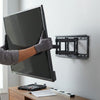
If you have a viable wall location, a wall-mounted TV in the kitchen usually lasts longer and causes fewer issues. Wall framing is designed to carry loads. Cabinets often aren’t.
Wall mounting also allows you to:
Keep the TV farther from heat and splatter
Angle the screen toward islands or peninsulas
Avoid sink splash zones
The Real Challenge: Glare
Kitchens are bright. Windows, overhead lights, and reflective counters punish glossy screens. Many “bad TV” complaints are really placement problems.
Whenever possible, choose a wall spot that allows a slight angle away from windows. Then select a TV that handles brightness and off-angle viewing well.
Kitchen TV Placement Zones: Avoid These, Favor These
Most kitchens don’t have one perfect spot—just the best compromise.
Zones to Avoid
These areas consistently shorten TV life:
Near the range or cooktop (heat and grease)
Above kettles, espresso machines, or toaster ovens (steam)
Heavy splash zones near sinks
Zones That Work Better
Kitchen TVs tend to succeed when they’re:
Across from the main prep area, allowing quick glances
Near the edge of the kitchen, visible from adjacent rooms
Mounted where cleaning around them is easy, not boxed in
If you have to stop working and reposition yourself every time you look up, the TV won’t earn its keep.
Kitchen TV Height: Forget Living Room Rules
Living-room advice assumes seated viewers. Kitchens don’t.
so it’s comfortable while standing at your primary work zone, then use tilt to fine-tune. Higher than a living room TV is normal—but mounting near the ceiling just because it “looks tidy” leads to neck strain.
If you’re choosing between two heights, pick the one that:
Keeps the TV out of splash range
Leaves cabinet and appliance clearance
Allows slight downward tilt toward where you stand most
How to Pick a TV for the Kitchen
The best TV for your kitchen isn’t the most expensive one—it’s the one that works in a bright, chaotic room.
Prioritize:
Wide viewing angles (you’ll watch from the side often)
Brightness and glare handling
Appropriate size (oversizing forces bad placement)
Simple, reliable smart features
Realistic audio expectations (kitchens are noisy)
Practical Size Guidelines
The Finishing Details People Skip (and Regret)
Power: Avoid cords crossing wet zones or overloaded outlets. Plan power deliberately.
Cables: Hanging cables collect grease and get snagged. Route cleanly with strain relief.
Control: If turning the TV on is a hassle, it won’t get used.
Under-Cabinet vs. Wall Mount: Quick Decision Guide
Choose an under-cabinet TV mount if:
You need to save space
You want the TV hidden when off
The cabinet base is strong or reinforced
Choose a wall-mounted TV setup in the kitchen if:
You have a stud-backed wall with a clear view
You want long-term stability
Cabinet bottoms are thin or already flexing
Final Reality Check
A kitchen TV should make the room more livable, not more complicated. Start with the safest, cleanest viewing zone. Choose the mounting style that works with the structure—not against it. Keep the TV modest in size, prioritize viewing angles and brightness, and treat wiring as part of the design.
Want more great ideas on creating the perfect TV-viewing space, no matter which room you’re in? Check out the rest of the . And when you’re ready, visit our .
Leave a comment
Please note, comments must be approved before they are published.