Renter-Friendly TV Mounting: How to Get a Clean Setup Without Deposit Anxiety

In rentals, the TV isn’t the hard part. It’s the walls (studs where you don’t need them, mystery materials where you do), lease rules written vaguely on purpose, and the low-grade anxiety that one bad anchor could turn movie night into a disaster.
The good news is, you’re not stuck choosing between a wobbly dresser and drilling like you own the place. Today’s renter-friendly options focus on what renters actually need—clean aesthetics with a plan for reversibility.
This guide will help you choose the right mounting approach for your space, understand what “no drill” really means, and build an apartment TV setup that looks intentional instead of temporary.
Start with the renter reality
Most mounting advice assumes you’re optimizing for a perfect look and permanent placement. Renters usually optimize for:
low wall risk (because you don’t always know what’s behind the paint)
easy move-out repair (small holes are one thing; anchor blowouts are another)
flexibility (leases end, layouts change, roommates change)
safety (a falling TV isn’t just expensive—it’s dangerous)
In many apartments, the safest, cleanest recommendation is a portable TV mount done well.
Portable TV mounts: the renter default
Portable TV mounts aren’t the flimsy rolling carts you remember. Modern floor stands use a VESA bracket, adjustable height, and built-in cable routing. Many include shelves for a soundbar or streaming box. For renters, the advantage is simple: you get proper viewing height and a “mounted” look without making your wall responsible for supporting a heavy screen.
What to look for:
Weight rating that comfortably exceeds your TV’s actual weight (ignore “fits up to 70 inches” marketing)
VESA compatibility that matches your TV exactly
Wide base / low center of gravity for stability
Cable routing that runs down the column instead of dangling behind the TV
Enough height range to place the screen center near seated eye level
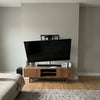
How to make it look built-in: Place the stand close to the wall, run cables straight down, and use paintable raceways or cord covers to hide the final run to the outlet.
Portable doesn’t mean zero-risk: If you have kids, pets, or a high-traffic area, prioritize a wide base over casters. If you choose wheels, make sure they lock—and actually lock them.
Placement first: the simplest upgrade to any apartment setup
Many apartment TV setups look “rental” because placement decisions come last. Before you commit to hardware, check three things:
Sightline: Is the TV centered to where people actually sit?
Light: Will glare from a window ruin daytime viewing?
Power: Can your cables reach cleanly without looping across the room?
A quick comfort rule: most people are happiest when they don’t have to lift their chin for long stretches. Portable mounts help because you can live with the height for a few days, then adjust. Wall mounts are less forgiving, and renters often mount too high because it “looks cinematic,” then pay the comfort tax daily.
“No drill” TV mounting: what it really means
“No drill” usually doesn’t mean “no consequences.” It typically means the weight is supported somewhere other than drywall anchors—by a floor stand, a clamp system, or a floor-to-ceiling tension pole. The better question is: where is the weight going?
A few practical notes:
Adhesive-based solutions are the riskiest. Adhesives are great for light objects. TVs create leverage when adjusted or bumped, and removal can peel paint or tear drywall paper—sometimes worse than small screw holes.
Tension systems can work, but they’re not universal. They rely on compression, so ceiling texture, uneven surfaces, or suspended ceilings can reduce reliability or look awkward.
For most renters, if “no drill” is a priority, a sturdy floor stand is the cleanest answer.
When is a real wall mount worth it in an apartment?
Sometimes wall mounting is the right move: you need floor space, you want the TV out of reach, or your layout demands it. The renter-smart approach is treating wall mounting as a justified decision—not the default.
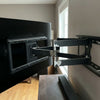
Here’s the truth: a “renter-friendly wall mount” is usually just a standard fixed or tilt mount installed correctly into structure (studs or appropriate masonry), at the right height, with a plan to patch on move-out. Renters get into trouble when they mount without knowing what’s behind the wall and rely on optimistic anchors.
TV mounting without studs: possible, but least forgiving
If you’re thinking about mounting without studs, step one is identifying the wall type:
drywall over wood studs (common; studs are safest)
plaster over lath (older; brittle and unpredictable)
concrete/masonry (strong but often restricted to drill)
metal studs (possible, but requires the right anchors and technique)
If you can’t confidently identify your wall type, that’s a strong signal to stop pursuing a wall mount and choose a portable mount instead. Mounting without studs can work in specific conditions, but it’s the least forgiving option in a rental—because “slightly wrong” can become expensive damage.
A simple tie-breaker covers most apartments: If you can’t anchor into structure, don’t hang a heavy TV on the wall.
Cable management is half the “mounted” look
Most setups look messy because cords are visible, not because the mount choice was wrong. Even if you can’t open the wall, you can still make it clean:
use paintable raceways/cord covers
keep cable runs short and vertical
plan where devices will live so you’re not dangling wires to a distant power strip
Loose cable loops look temporary and create snag risk. A clean cable path makes almost any setup look intentional.
Related Reading: Creative Ways to Hide Cords on a Wall-Mounted TV
What should most renters do?
For most rentals, most walls, and most people who want a clean setup without deposit anxiety, the best answer is a solid portable TV mount paired with thoughtful cable management. It avoids unpredictable wall structure, keeps move-out simple, and preserves flexibility.
If you have clear stud access, written permission, and a real reason to wall mount, can be worth it. But when move-out day comes, the best setups are the ones that come apart cleanly. Your future self with a spackle knife will thank you.
We have more ideas for renters on our blog
Leave a comment
Please note, comments must be approved before they are published.